For DMAG6, I used these parameters for all stereo pairs:
alpha = 0.9
truncation value (color) = 30
truncation value (gradient) = 10
truncation value (discontinuity) = 10000.
iteration number = 5
level number = 5
weight for data cost = 0.5
disparity tolerance = 0
For DMAG5, I used these parameters for all stereo pairs:
window radius = 32
alpha = 0.9
truncation value (color) = 30.0
truncation value (gradient) = 10.0
epsilon = 4
disparity tolerance = 0
window radius (occlusion smoothing) = 9
sigma space (occlusion smoothing) = 9.0
sigma color (occlusion smoothing) = 25.5
downsampling ratio = 1
Stereo pair 1 (min disparity = -26 and max disparity = 19):

Left image after epipolar rectification.

Right image after epipolar rectification.

Left depth map produced by DMAG5.

Left depth map produced by DMAG6.
Stereo pair 2 (min disparity = -62 and max disparity = 13):

Left image after epipolar rectification.
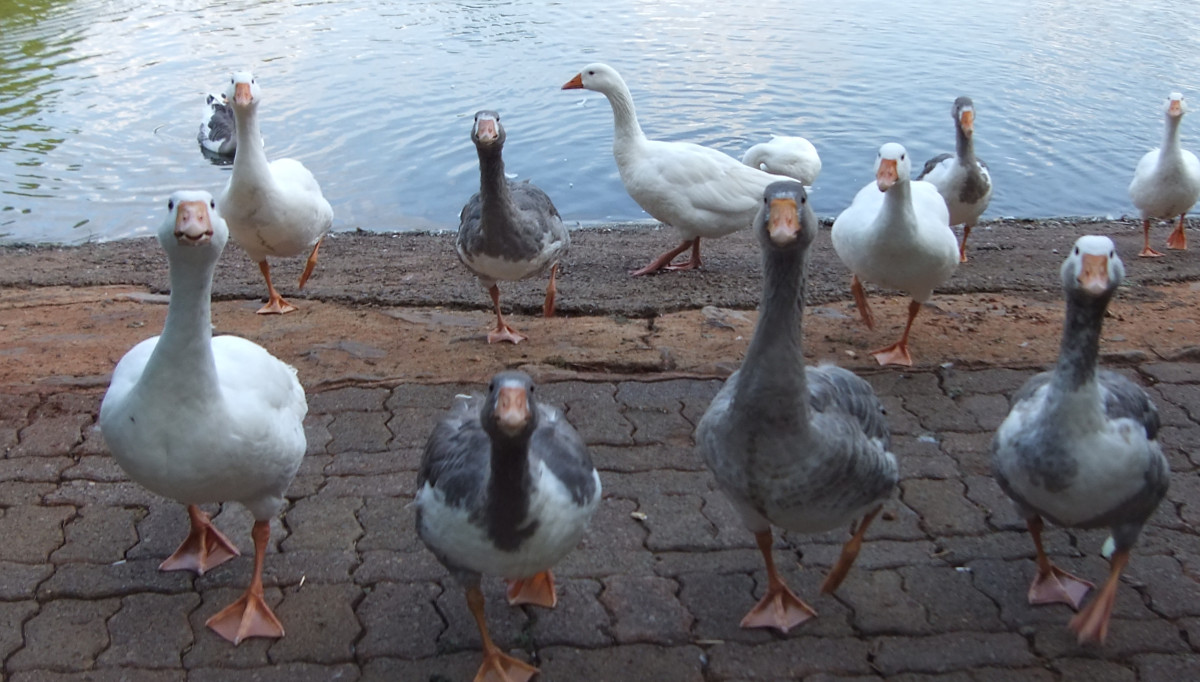
Right image after epipolar rectification.

Left depth map produced by DMAG5.

Left depth map produced by DMAG6.
Stereo pair 3 (min disparity = -18 and max disparity = 31):

Left image after epipolar rectification.

Right image after epipolar rectification.

Left depth map produced by DMAG5.

Left depth map produced by DMAG6.
Conclusion:
Looks like DMAG6 can be about as good as DMAG5 (if not better) as long as the data cost weight parameter is properly chosen. The larger the data cost weight parameter is set to, the less smooth the depth map is gonna be. There is a sweet spot to hit that gives the best possible depth map.
No comments:
Post a Comment